Van den Grooten Oorlog
In 1968 Oscar Ricour (1892–1978) and Marie Beck (1893–1973) from Dranouter told of their experiences in the First World War. What they said was recorded on tape.
On 11 November 1977 Opbouwwerk Heuvelland invited young people. None of them could connect their day off (from school, from work) with the armistice of 1918. They listened to the recordings of Oscar and Marie. They were moved and decided to visit, regularly, the same man or woman who had lived through the Great War.
After a few weeks the group was greatly enlarged.
The participants visited, in Bailleul (Belle-F), Joseph Legrand (1898–1992) and Marie Logie (Sr Marie-Alphonse) (1902–1997); in Boeschepe (F) Michel Verdonck (1904–1982); in De Klijte Jules Vandamme (1897–2000); in Dikkebus Florent Denuwelaere (1900–1989); in Dranouter Gerard Masschelein (1898–1996); in Elverdinge Louise Parmentier (1895–1983); in Ypres Martha Brion (1908–2005), Cyriel Dekeuwer (1896–1982), Marie Lacante (1904–1996) and Alfons Lefebvre (1892–1983); in Hollebeke Martha Vandamme (1899–1986); in Jette Maurits Liefooghe (1900–1988); in Kemmel Jules Arnout (1901–1988), Camille Casteele (1886–1979), Julie Cattrysse (1901–1988), Marcel Dequirez (1902–1979), Raphaël Ennaert (1893–1989) and Maurice Gryson (1895–1985); in Klerken Emile Soenen (1891–1971); in Loker Henri Callens (1892–1983) and Maurice Dhondt (1905–1989); in Messines Berthe Freyne (1905–1996) and Lucien Loridan (1901–1985); in Nieuwkerke Dolf Deconinck (1889–1981); in Poperinge Michiel Hardeman (1905–1986); in Reningelst Theofiel Boudry (1899–1988), Georges Deconinck (1900–1988), Maria Govaere (1896–1991) and André Houwen (1904–1986); in Steenvoorde (F) Jérôme Verdonck (1894–1974); in Voormezele Julie Derynck (1898–1984), Jules Lepla (1899–1986), Jules Leroy (1894–1988) and Remi Sergier (1895–1980); in Westouter Marie Brutsaert (1890–1983), Pulcherie Demeulenaere (1910–2003), Julienne Deweerdt (1901–1992), Marcel Mahieu (1896–1985) and Clara Vaneechoutte (1908–1989); in Wijtschate Jeanne Knockaert (1900–1985); in Wulvergem Emma Beerlandt (1892–1981), Camille Boudry (1889–1979) and Henri Demey (1899–1981); in Zillebeke Gaston Boudry (1901–1981).
Edmond Dorémieux from Bailleul recorded testimonies in La Chapelle (Lot-et-Garonne) from Jean-René Dandieu (1895–1987).
Kurt Fagnoul from Eupen recorded testimonies in Herzogenrath from Sebastian Stevens (1898–1980) and in Monschau from Erwin Mengering (1892–1987).
The Imperial War Museum supplied testimonies of James Davidson Pratt from Aberdeenshire (1891–1978), Ulick Bernard Burke from Devon (1895–xxxx), Victor Edgar Fagence (1897–1987) and Henry Oxley (1899–XXXX) from London.
The book also contains a chapter on the course of the war in West Flanders, written by the historian Jos De Smet.
A large team first made the recordings, and then many volunteers took care of writing out the texts: Eddy Barbry, Mieke Baudewijn, Leo Behaegel, Filip Boury, Jozef Constandt, Wem Cornelissen, Edward Debaene, Antoinette Debouvere, Trees Debouvere, Gerard Declercq, Hans Declercq, Jeanine Defieuw, Luc Deforche, Lucien De Geeter, Stefaan Dehollander, Leo Delaleeuw, Piet Delhaye, Marieke Demeester (who did the final editing), Walter Demolder, Marleen De Smet, Lieven Desramaults, Edmond Dorémieux, Emmanuel Dotselaere, Kurt Fagnoul, Emiel Hardeman, Jan Hardeman (who coordinated the programme), Gerard Hautekeur, Luc Lazeure, Hendrik Loobuyck, Hubert Masquelin, Helga Moers, Siene Orbie, Herwig Peferoen, Marc Rose, Hilde Rijon, Patrick Ryde, Monique Spriet, Ria Vandamme, Paul Vandenberghe, Stefaan Van Poucke, Frank Verdru, Daniël Verfaillie, Jan Yperman.


The book was ready on 11 November 1978, for the first performance of NOOIT BRENGT EEN OORLOG VREDE (Never Does a War Bring Peace).
For the new edition of the book, Marieke Demeester listened again to the recordings from 1968–1978. She discovered that not all the interesting passages had been written out. Those passages are included in the new 2016 edition. The men and women who lived through the Great War told their story in the regional dialect. The texts were written out in Dutch, in a form that came as close as possible to the spoken language.
The new edition was presented on Saturday 19 March 2016 in Loker.
Would you like to read the book yourself? See Where to find the book.
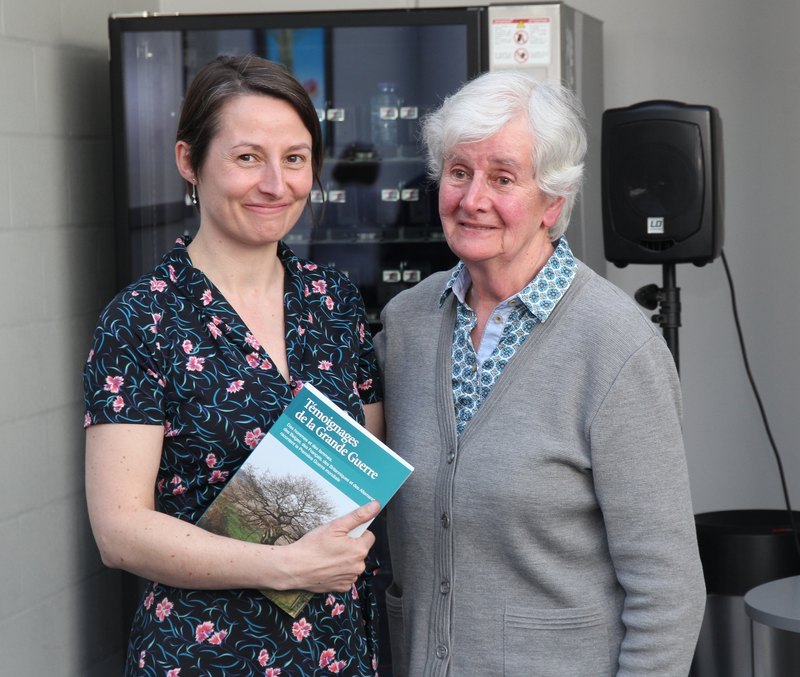
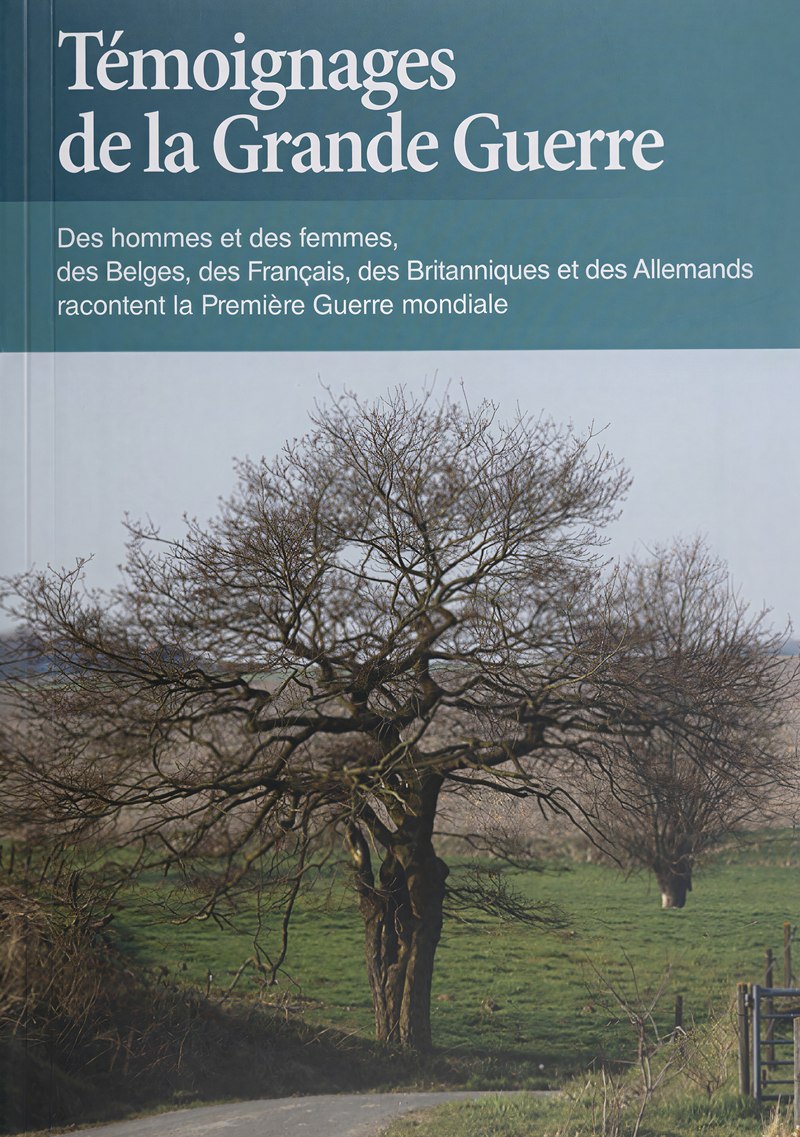
The book is also available in French: Noëlle Michel translated it as Témoignages de la Grande Guerre.

Publisher of all editions: Malegijs vzw, Wijtschatestraat 2/B, 8956 Kemmel.